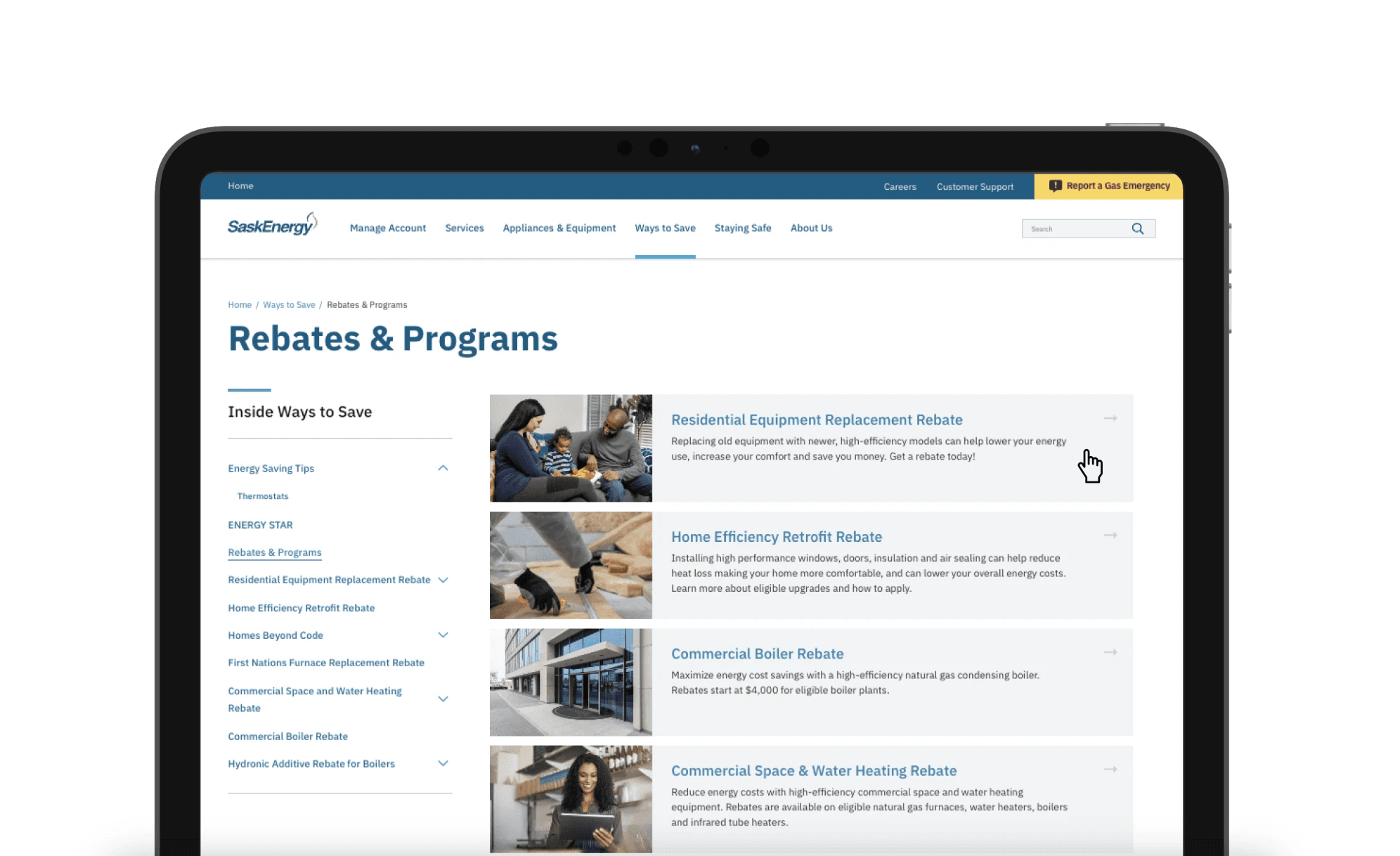
As the lead designer for the Residential Equipment Replacement Rebate program, my focus was on fostering innovation and user-centric solutions. This initiative incentivizes homeowners to choose energy-efficient equipment, aiming to reduce energy costs and greenhouse gas emissions while enhancing comfort. While seemingly straightforward, I wanted to add to my case study! Its relevance to my community and its government nature warranted.
Through collaborative ideation and strategic planning, we aimed to create a program that not only benefits individual homeowners but also contributes to a more sustainable future climate.
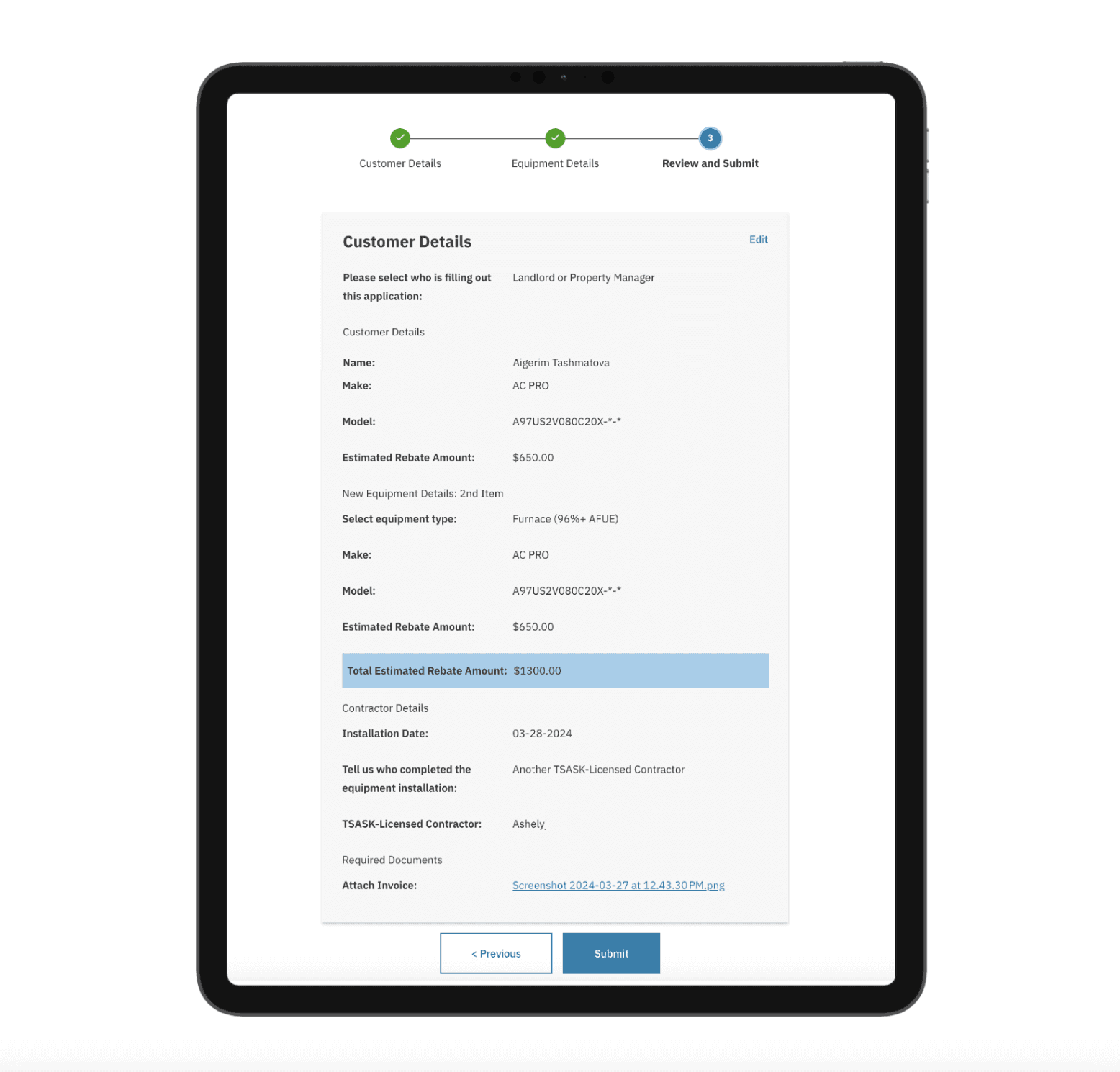
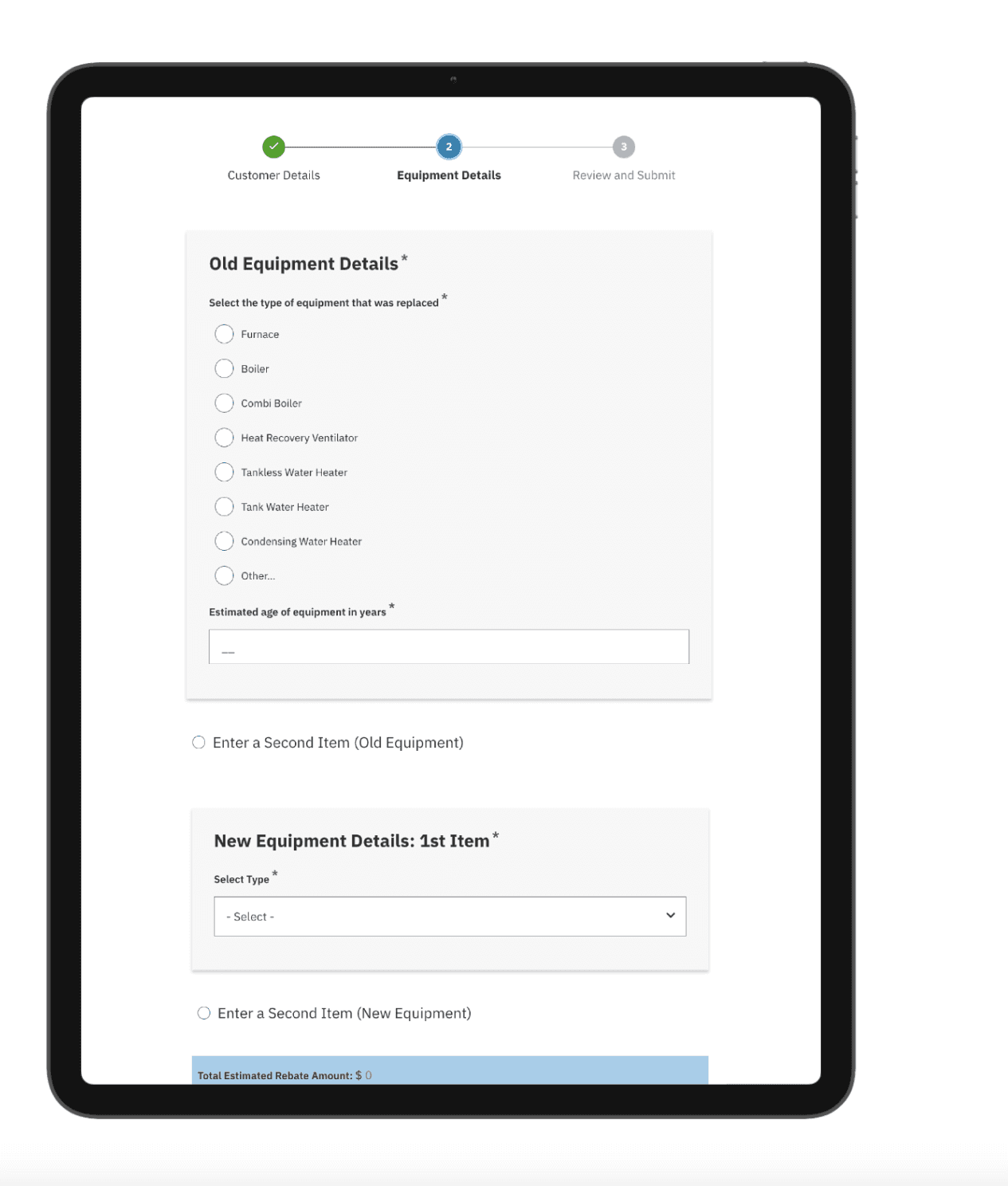
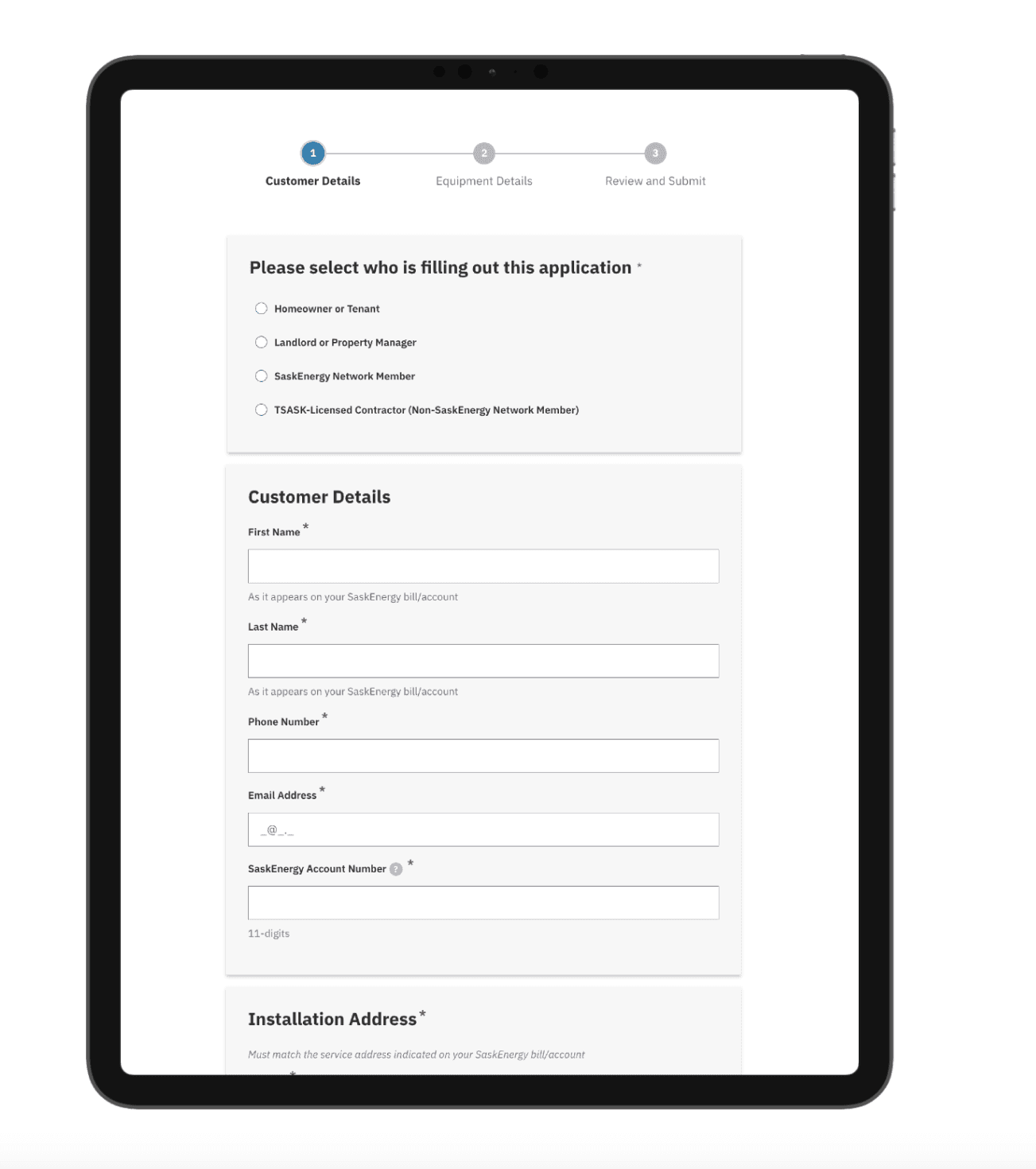
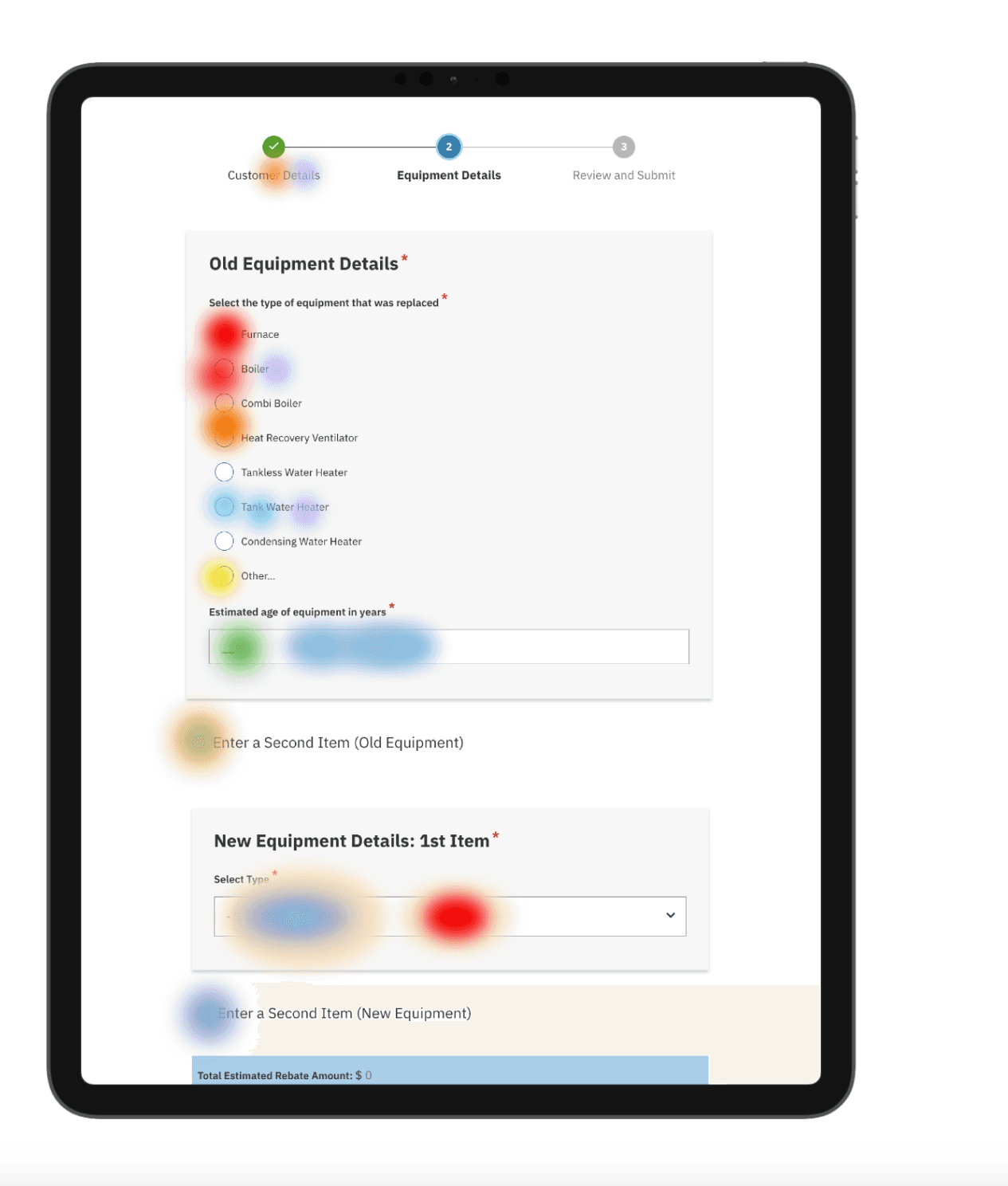
We utilized methods like user interviews, surveys, and usability testing to collect insights and feedback. It helped us to find out the right acceptance criteria. This research informed our iterative design and prototyping of the smart form, which we consistently refined based on user input.
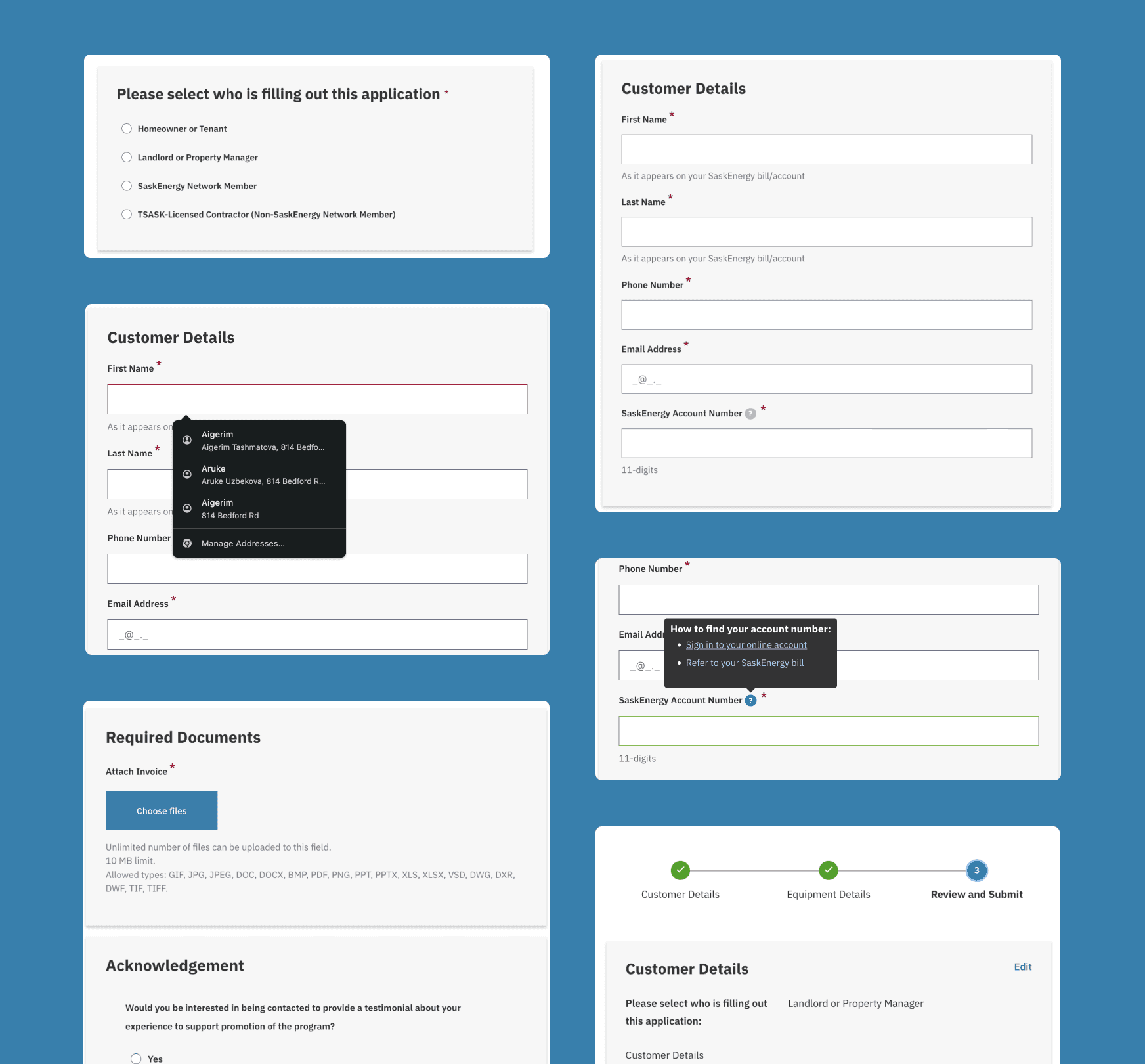
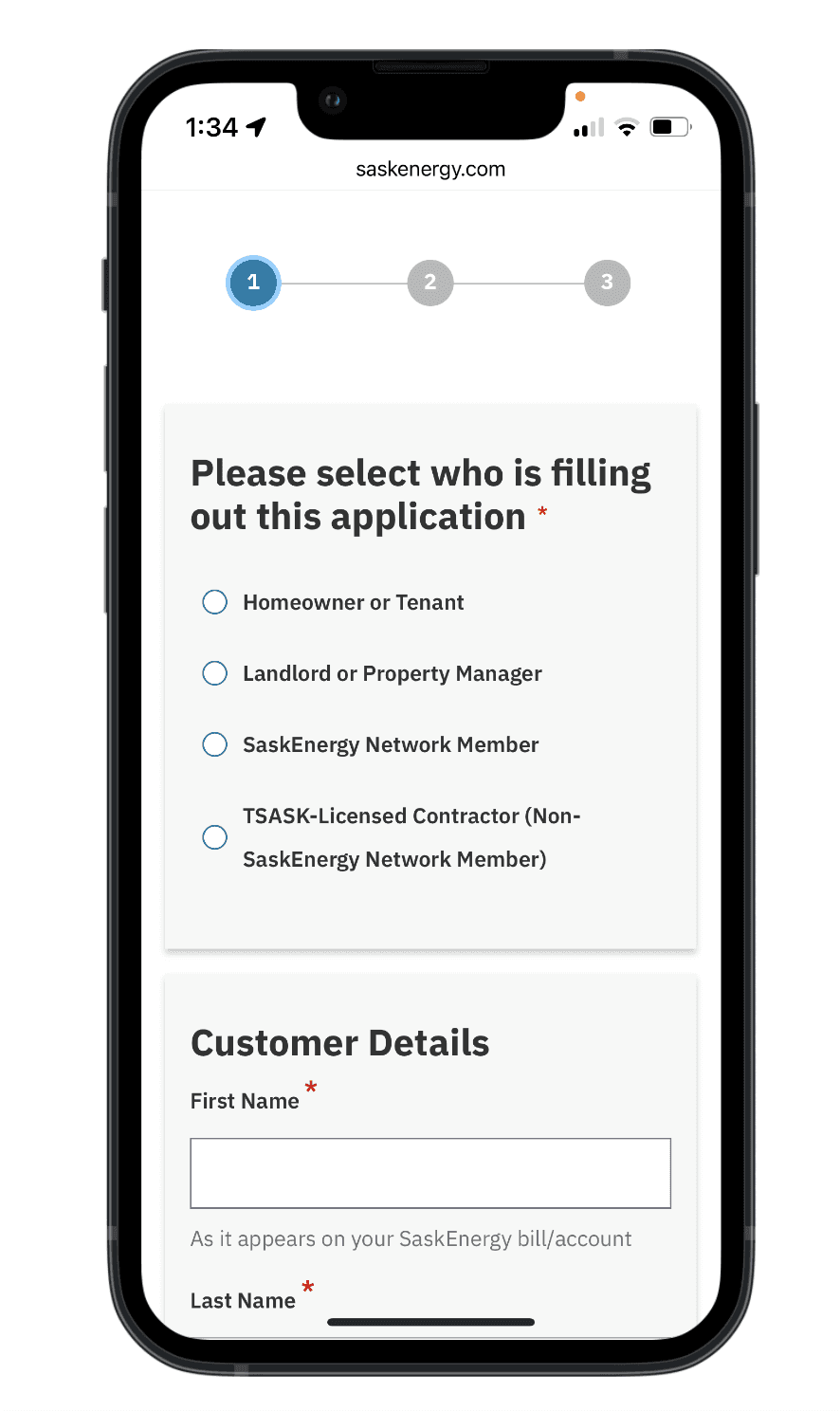
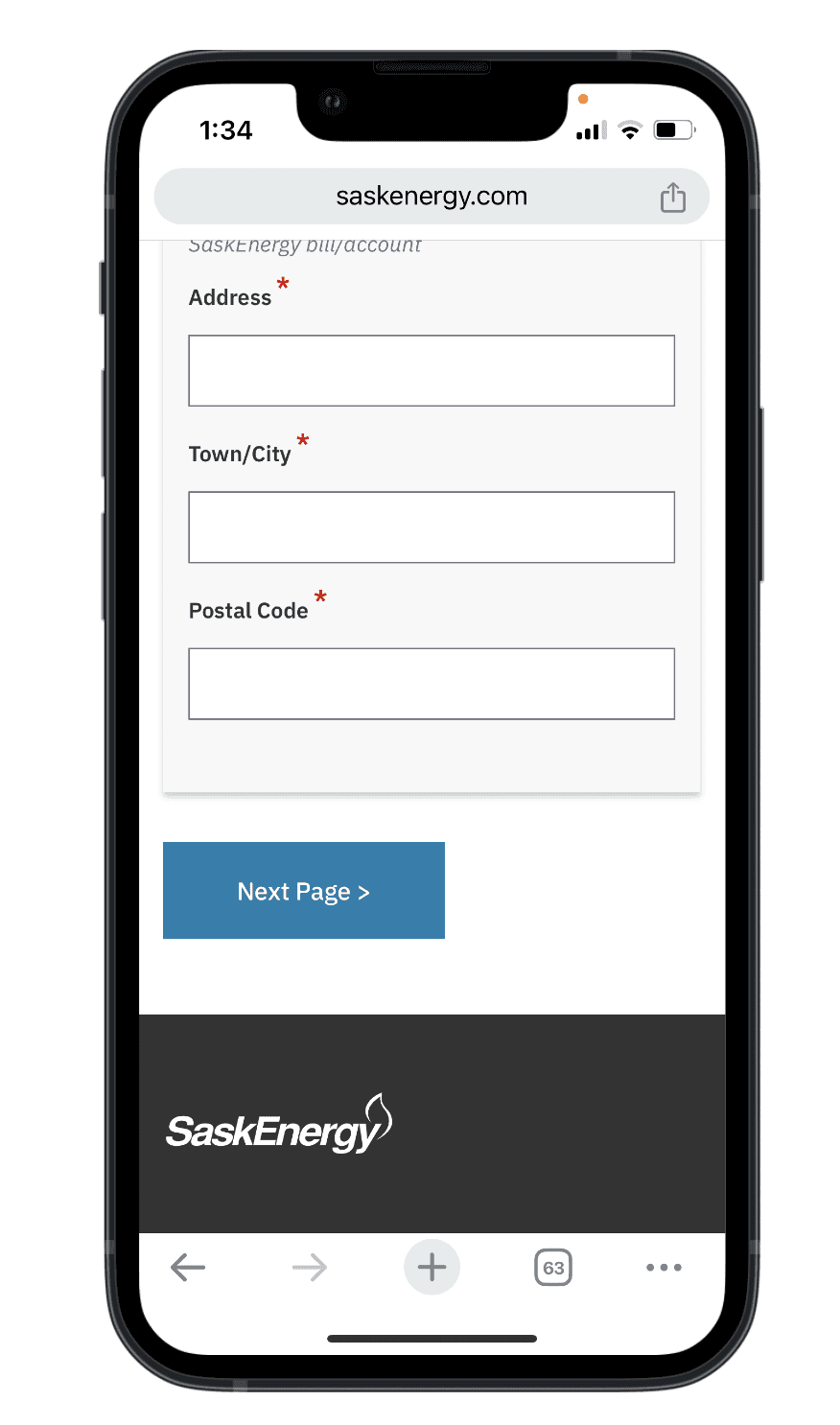
In our exploration of the Rebate Program's usability, we conducted remote moderated usability tests focusing on four user task scenarios: eligibility determination, application process navigation, document upload, and rebate tracking.
The hotspot testing was highly effective, leading to targeted design rational that simplified the application process. This resulted in a more intuitive interface, higher application success rates, and overall better user satisfaction.